
Analysis
Nature as Capital: Rethinking Our Planet as a Profitable Investment!
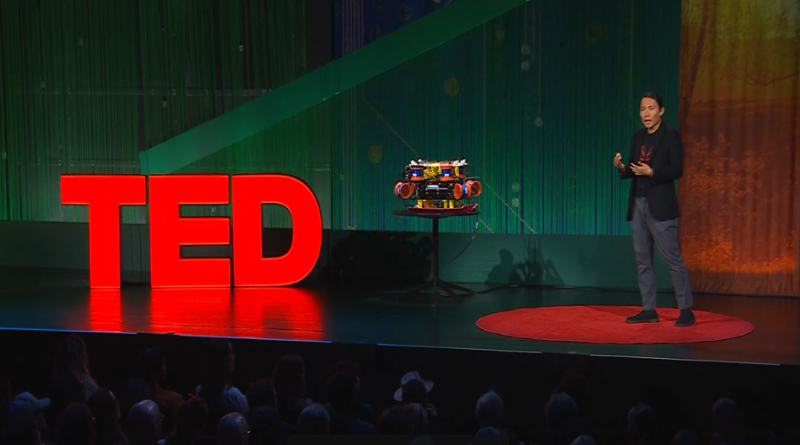
TL;DR: Tom Chi's new book, 'Climate Capital,' argues for rethinking nature as a valuable economic asset, aligning economic growth with ecological health to create a regenerative future.
Meta: Tom Chi proposes a radical shift: valuing nature as economic capital to combat climate change and drive sustainable growth.
Alright, let’s get philosophical for a minute, because Tom Chi, the Google X co-founder, just dropped some wisdom that could change how we look at our planet. His new book, 'Climate Capital,' ain't just another tree-hugging manifesto; it's an economic blueprint! Chi argues that we need to stop seeing nature as something separate, or worse, something to exploit, and start seeing it as capital. As in, a really valuable investment. He says we can align economic growth with a healthy biosphere, making humanity a net positive to nature. Now, that's what I call a paradigm shift!
Chi believes the idea that addressing climate change is "too expensive" is dead wrong. Instead, he says, it's becoming "too expensive to not address climate destabilization." Think about it: our economy relies on nature for everything from air and water to soil and biodiversity. So, why aren't we valuing it like the precious asset it is? This man runs a venture capital firm focused on making humanity net positive to nature, so he’s not just talking theory; he’s talking about reinventing the industrial economy to be compatible with, or even generative to, nature. That's a mic drop moment right there.
The Capitalistic Algorithm Reboot
Chi gets that capitalism's algorithm, as it stands, often drives the demolition of natural systems if something of 'greater economic value' can be squeezed out. It focuses on margins and scaling production, often severing essential connections in natural systems. But he insists it doesn't have to be that way. By changing how Western nations value nature, we can make managing the wealth of bioregions a point of national investment and pride. It's about upgrading our economic thinking to recognize that land and natural resources are finite, and their value should be maximized.
This means a total inversion of values and aesthetics. Instead of just fencing off a few lots, it’s about recognizing that the wealth of ecosystems accrues over time – in topsoil, in healthy hydrology, in biodiversity. We need to start supporting keystone species and assigning more reward to economic actors who build products, services, or government programs that benefit more organisms for the same resources. It’s about making 'ecological economics' just as important as 'unit economics.'
Making it Make Sense (Financially)
Chi even translates this into financial language. He breaks down land into 'managed' (M) and 'unmanaged' (U) units, with the total value being the sum of both. The economic task, he argues, isn't just to maximize the value of each 'managed' unit, but to monitor the value improvement of 'unmanaged' units too, because nature can and does accumulate natural wealth. He's saying we should maximize the value of all lands, recognizing we're on a planet of finite area.
This isn't just about good feelings; it's about smart investing. New equipment that offers better unit economics alongside better ecological economics through lower energy use or more skillful material use is the key. But, as Chi warns, "we can’t get there with a core framework of extraction and exploitation." We need a complete rethinking of wealth, one that comes from benefiting as many organisms as possible with each proton and accumulating wisdom for future generations. That's a legacy worth building.
What's Next
This book is a call to action for economists, policymakers, and business leaders to adopt a more holistic view of value. Expect to see growing discussions around natural capital accounting, ecosystem services markets, and investment strategies that prioritize regenerative practices. The idea that nature is an investment, not just a resource, could truly reshape how we approach economic development and environmental protection. It's not just climate action; it's smart business. And that's something everyone can understand.
Knowledge is power, people!
Previous
PHEV's Pesky Problem: Study Says Some Hybrids Guzzle Triple the Fuel Claimed!
Next
Grey, Blue, Green, Gone: Why Equinor Pulled the Plug on European Blue Hydrogen!

Eddie W
Author
Need an OG image?
Share this story to automatically generate an image via /api/og.
Comments
Join the discussion below.