

Analysis
Grey, Blue, Green, Gone: Why Equinor Pulled the Plug on European Blue Hydrogen!
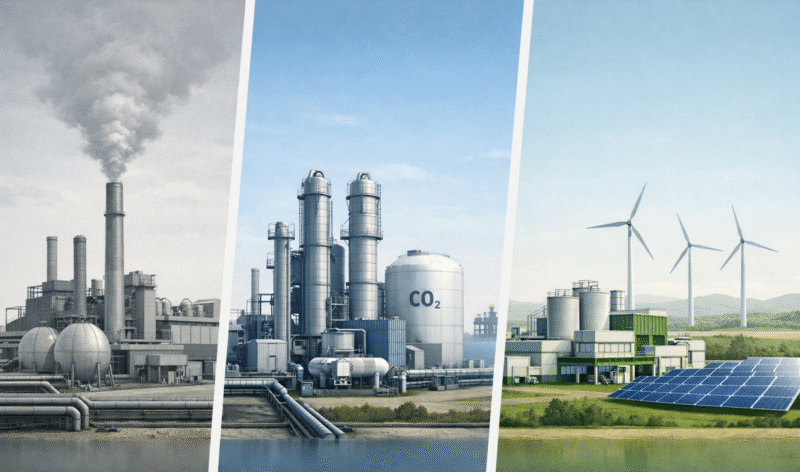
TL;DR: Equinor has scrapped its major blue hydrogen project in Groningen, Netherlands, not due to technical issues, but a lack of industrial buyers willing to commit to long-term contracts, highlighting the economic challenges for partial decarbonization solutions.
Meta: Equinor's blue hydrogen project collapsed due to insufficient customer demand, signaling green hydrogen's growing economic viability.
Alright, let's talk about the hydrogen hype and the cold, hard cash. Equinor, one of the big players, just pulled the plug on their blue hydrogen project in Groningen, Netherlands. Now, this wasn't some engineering snafu or public outcry; it was purely economic. The bottom line? No customers. That’s right, this big, shiny project, backed by EU innovation funds, couldn't find industrial buyers willing to sign those long-term contracts for blue hydrogen. It just goes to show you, markets don't care about rhetoric; they care about results and costs. And right now, green is looking a whole lot greener than blue!
This proposed facility was supposed to pump out over 200,000 tons of hydrogen annually – a significant chunk of current Dutch demand. But the supply chain was complex: natural gas from Norway to the Netherlands, converted to hydrogen, then the captured CO2 shipped back to Norway for storage. That's a lot of moving parts and multiple commercial interfaces. When you compare that to green ammonia, produced with cheap solar and wind in places like Morocco and then shipped to Europe, the 'real ammonia math' starts to look very different.

The Carbon Price Crunch
Here’s where it gets interesting: the European carbon pricing framework, the EU ETS, is shifting the playing field. Carbon prices are already around €73 per ton today, but EU guidance projects them to hit €200-€300 by the 2030s and '40s. At those prices, grey ammonia becomes totally uncompetitive. And even blue hydrogen, which is less carbon-intensive than grey but still relies on fossil fuels and carbon capture, starts to lose its luster.
Industrial buyers are looking 20 years down the road. Why lock into a blue hydrogen deal that only offers partial decarbonization (0.6 to 1.8 tons of CO2e per ton of ammonia) when green alternatives offer near-zero emissions? Green ammonia, even if more expensive today, avoids 95%+ of emissions and eliminates methane feedstock entirely. When carbon prices get serious, the contest is between blue and imported green, not blue and grey. Smart money is betting on the solution with the least carbon exposure in the long run.
Beyond Hydrogen for Heating
Let’s be clear, the legitimate industrial use case for hydrogen here is ammonia production for fertilizers and chemicals, not heating homes or powering passenger vehicles. My own projections suggest actual future hydrogen demand will be far more limited, mostly as a hydrogenator for biofuels, outcompeted by alternatives like Fortescue’s new electrochemical green iron process. The German 'hydrogen backbone' pipeline, for instance, looks like a stranded asset in waiting because it was built on assumptions of ubiquitous hydrogen for energy that never materialized.
Instead, importing green industrial intermediates – like low-carbon ammonia, green iron, or methanol – from regions with abundant cheap renewables is becoming the winning strategy. This allows European industries to decarbonize upstream inputs while keeping high-value downstream manufacturing local. It preserves competitiveness without remaking the entire energy system around hydrogen as a primary energy carrier. It's about smart sourcing, not just making hydrogen for hydrogen's sake.
What's Next
Equinor's cancellation isn't a setback; it's a market signal. It tells us that incremental emissions reductions from fossil fuel-based solutions like blue hydrogen may no longer be enough in a world with tightening carbon budgets and rapidly falling renewable energy costs. Expect more investment and focus on truly green hydrogen and its derivatives, produced where renewables are cheapest and most abundant, then shipped to industrial centers. The future is green, not just less grey. That's the real bottom line, people!
Get with the program, or get left behind!
Previous
Nature as Capital: Rethinking Our Planet as a Profitable Investment!
Next
EU's Electric Bus Bonanza: Battery Power Takes the Wheel, Hydrogen Hits the Brakes!

Eddie W
Author
Need an OG image?
Share this story to automatically generate an image via /api/og.
Comments
Join the discussion below.