

Analysis
Germany's Hydrogen Hangover: Audit Court Calls Time on the 'Inevitable' Future
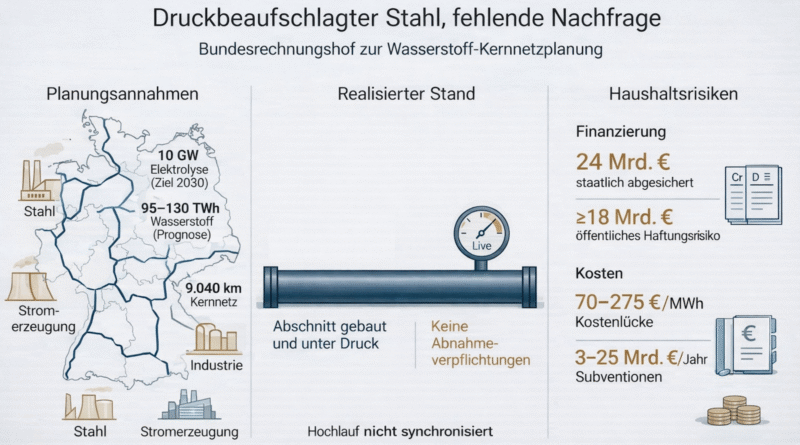
TL;DR: Germany's top auditors just dropped a bombshell, telling the government its grand hydrogen strategy is way off track, too expensive, and needs a "Plan B." Turns out, what looked like an inevitable hydrogen future is actually a financial headache, with massive infrastructure built for demand that ain't showing up.
Meta: Germany's Federal Audit Court is challenging the country's extensive hydrogen strategy, warning of unrealistic goals, high costs, and a need for a 'Plan B'.
Alright, alright, settle down now! You know how sometimes you plan a big, fancy party, you send out all the invitations, you decorate the hall, and then… nobody shows up? Well, that's kinda like what's happening with Germany's big bet on hydrogen. The Federal Audit Court, which ain't exactly known for its jokes, just threw a wet blanket on the whole hydrogen parade, saying the government's strategy is way outta whack. We're talking billions of Euros already spent, more billions promised, and a whole lot of pipelines leading to... well, nowhere, it seems.
The Grand Hydrogen Plan: A Reality Check
See, back in the day, when climate change was screaming louder than my mother-in-law, hydrogen looked like the golden ticket. It could store renewables, transport energy, power vehicles – it seemed like it could do it all! Germany, with its history of climate leadership, jumped on it, forming task forces, roadmaps, and pouring cash into it. But fast forward to now, and the auditors are saying, "Hold on a minute, folks. This picture you painted? It ain't real."
Their report is like a cold shower on a hot day. The domestic electrolyzer capacity for 2030 was supposed to be 10 GW, but they're barely at 0.2 GW, and now only expect less than 5 GW. And for imports? Germany was hoping to snag up to 91 TWh, but the entire world's planned green hydrogen production by 2030 with final investment decisions is only 63 TWh! That's like expecting to drink three-quarters of all the champagne at a party, but you're not even on the guest list! Programs meant to boost imports haven't paid out, and industrial demand for hydrogen? It's just not materializing. Four major steel projects that were supposed to gobble up hydrogen? One bailed, the others are unsure. Even the planned role of hydrogen in power plants got quietly cut back. It's like building a highway for cars, but then nobody buys cars.
Expensive Pipes to Nowhere
And here's the real kicker: Germany's gone ahead and approved a 9,040 km hydrogen backbone network, designed for massive capacity, with two-thirds supposed to be operational by 2030. Parts of this pipeline are already in the ground and pressurized, folks! But if there's no supply and no demand, who's gonna pay for it? That's right, you are, the taxpayer. The financing mechanism for this backbone has capped network fees during the ramp-up, with shortfalls covered by a state-guaranteed loan that could hit 24 billion Euros! If the utilization doesn't materialize, the government could be on the hook for over 18 billion Euros. Talk about a bill you don't wanna get in the mail!
This ain't just Germany, either. Economic bigwigs in France are singing a similar tune, questioning hydrogen's widespread use, especially in heavy-duty transport, where battery-electric trucks are proving far more efficient and cheaper. They're saying, "Look, direct electrification is just better for most things." The auditors are basically saying, hydrogen should only be for places where direct electrification just ain't possible, like certain industrial processes. Everywhere else? Too inefficient, too costly, too much CO2 lost in conversion.
What's Next
This comprehensive re-evaluation will likely force Germany and potentially other European nations to narrow the scope of their hydrogen strategies, focusing on niche industrial applications rather than broad energy and transport roles. This shift could lead to increased investment in direct electrification solutions (like battery EVs and grid upgrades) and a re-prioritization of clean energy infrastructure. The financial implications of the current over-built hydrogen network will be a major point of discussion, possibly leading to delays, repurposing, or even decommissioning of underutilized segments. This is a critical moment for European clean-tech policy, moving from ambitious, broad strokes to more disciplined, economically viable pathways.
So, it looks like Germany's grand hydrogen party just got scaled back to a small gathering. You know, sometimes you gotta learn the hard way. But hey, at least they're learning! And that's what makes a difference, folks. That's the real deal.
Previous
Lunar Energy Rakes in $232 Million: Aiming to Eclipse Tesla Powerwall in Home Storage Market
Next
Stellantis Stumbles in Staggering EV Retreat: Billions Lost and the Hemi Returns!

Eddie W
Author
Need an OG image?
Share this story to automatically generate an image via /api/og.
Comments
Join the discussion below.