

Analysis
US Fleet Payments Finally Catching Up: EV Charging & Gas on One Card – Hallelujah!
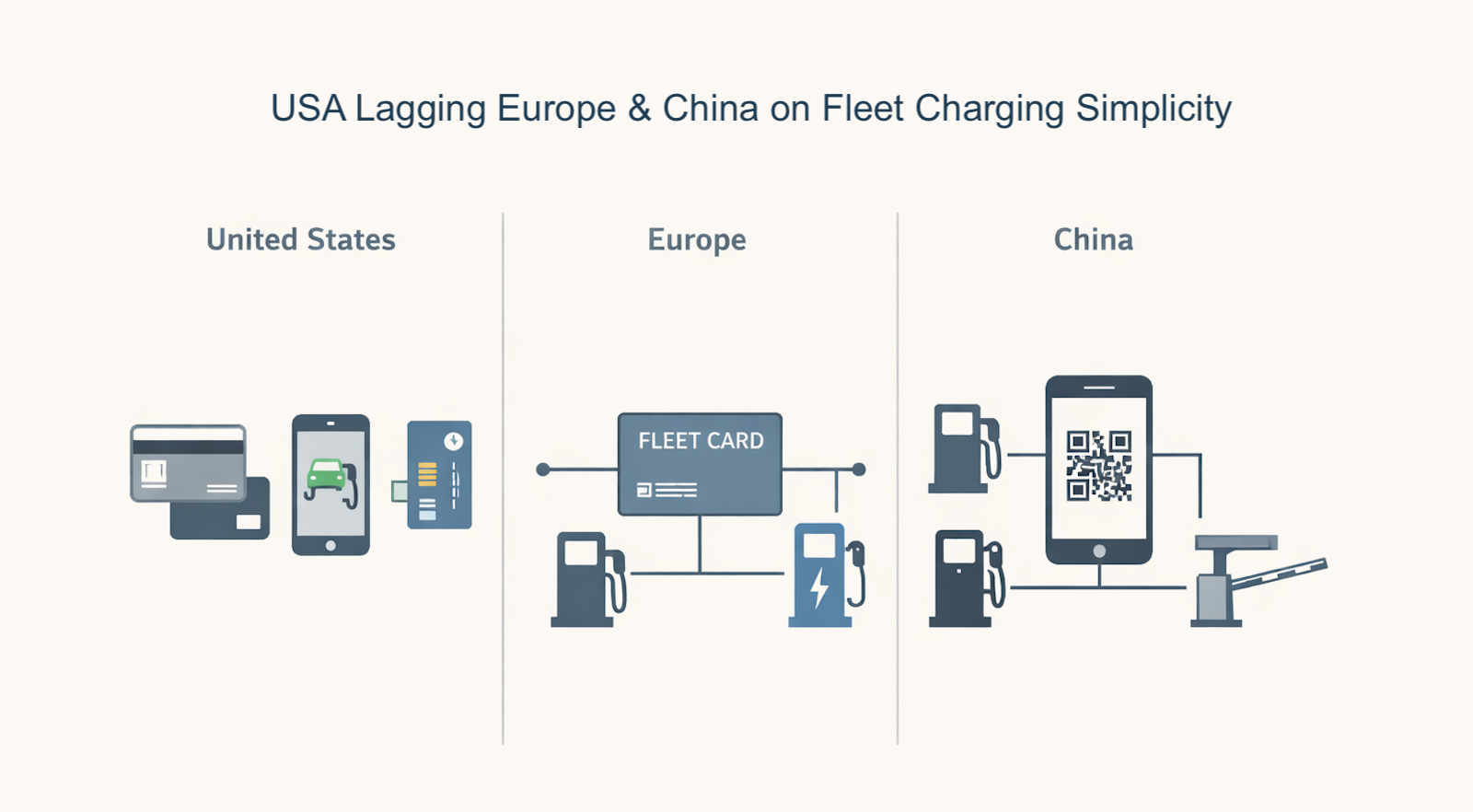
TL;DR: The US fleet industry just made a baby step forward! WEX, a big fleet card provider, finally lets you put gas and EV charging on one card, one invoice. For fleets, that’s huge. For Europe and China? They’ve been doing this for years. Better late than never, I guess!
Meta: WEX, a major US fleet card provider, finally enables combining gasoline and public EV charging onto a single card and invoice, a routine capability in Europe and China for years.
Uncle Sam's Payment System: A Step Back in Time?
Alright, alright, gather 'round, because this is one of those stories that makes you scratch your head and say, "What took 'em so long?!" So, WEX, one of the big dogs in US fleet cards, just announced they can finally combine gasoline and public EV charging onto one single card, one account, and one invoice. Now, for American fleet operators, that's a genuine "Hallelujah!" moment, closing a long-standing operational headache. No more drivers juggling different cards and apps, no more finance folks tearing their hair out over separate reports. It's all tidied up, neat as a pin.
But here's the punchline, folks: this ain't new. Not by a long shot. This capability has been as routine in Europe and China for years as my morning coffee. They've been running mixed energy fleets for ages, and their payment systems evolved right along with them. Over there, a multi-energy card that covers diesel, gasoline, AC, and DC fast charging on a single account is just, well, normal. They've even got RFID activation standard because it just works! Meanwhile, here in the States, we've been clinging to specialized fuel cards like they're gold, designed for a world of gas stations that's slowly, surely, changing.
The US Plays Catch-Up, Again
So why the lag, you ask? Well, the US market kinda built its payment systems around credit cards, optimized for a gasoline-dominated world and long-haul trucking. Public EV charging just emerged as a wild, fragmented ecosystem of networks, apps, and billing models. For years, most US EV charging was paid for with regular consumer credit cards, not fleet accounts. This fragmented mess was tolerated because, let's face it, gasoline was king, and our accounting systems were apparently more patient than a saint.
This ain't the first time the US has been slow to the digital party, either. Remember EMV chip cards? We started migrating around 2015, about a decade after Europe. And contactless payments? Common in Europe and Asia way back in the early 2010s, but we didn't really get on board until the pandemic forced our hand. Real-time bank-to-bank payments? India launched theirs in 2016, processing billions of transactions, while the US is just rolling out its equivalent now. It's like we always get there, but we take the scenic route, with a few detours and coffee breaks along the way.
What's Next
This unified fleet payment system is a signal, not the finish line. It shows that the US market is finally recognizing mixed-energy fleets as the new normal, not just a temporary experiment. While we still have ground to cover to match the deep interoperability and standardized data of other markets, this integration removes a significant source of friction for fleet operators transitioning to EVs. The lesson is clear: digital and energy infrastructure are intertwined, and smooth payment systems are essential for accelerating the clean energy transition. Because who wants more friction in their life, especially when it comes to business?
So, we finally got gas and electricity playing nice on one card. Now maybe we can get my kids to clean their rooms. One step at a time, folks, one step at a time!
Previous
American EVs Get a 'Buy Local' Boost: Biden Policies Pump Up Domestic Content!
Next
VW China's 'Zonal' Brain: New Electric Architecture Paving the Way for Smart EVs!

Eddie W
Author
Need an OG image?
Share this story to automatically generate an image via /api/og.
Comments
Join the discussion below.