

Analysis
China vs. Germany: Hydrogen Pipelines - Same Length, Different Logic?
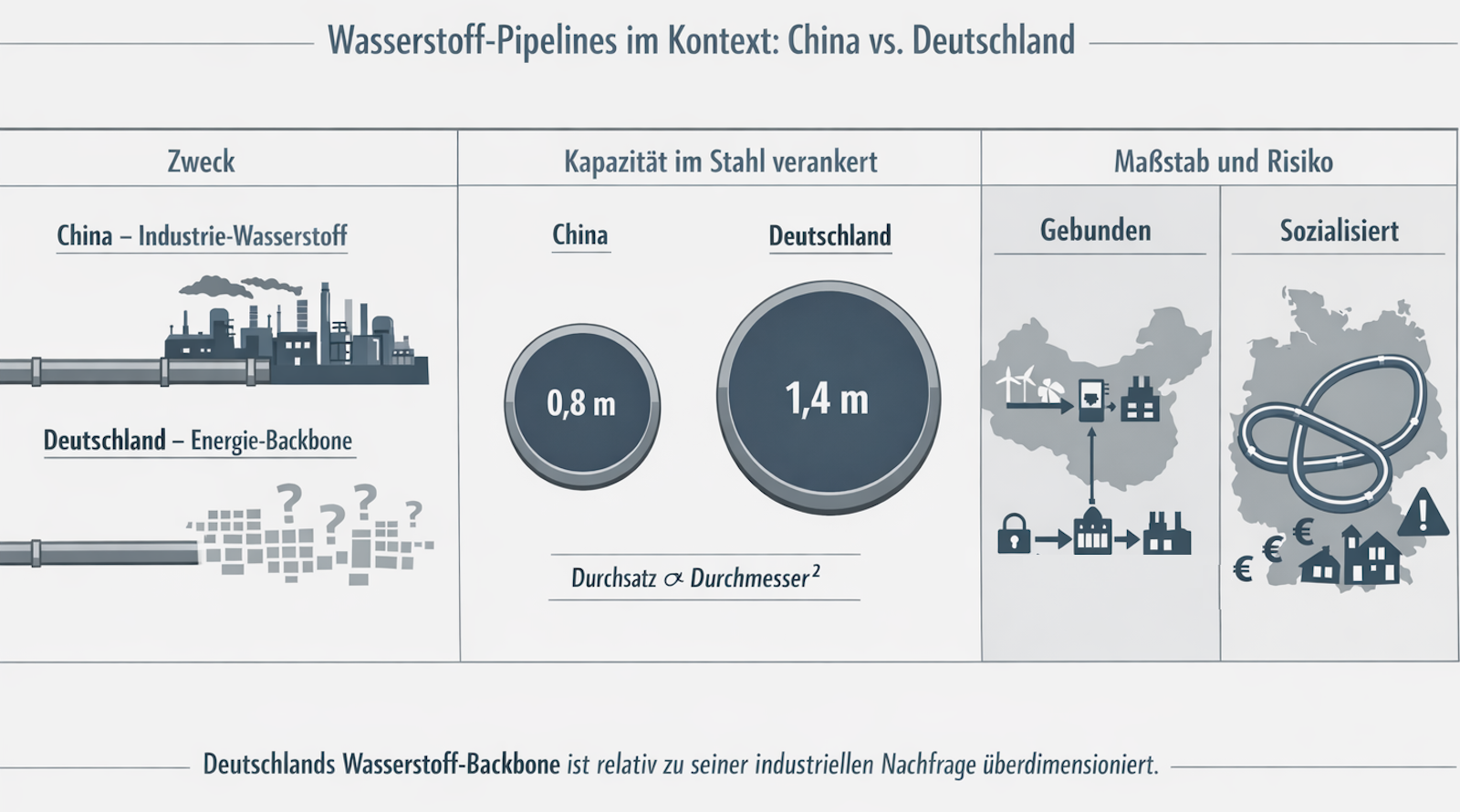
TL;DR: When it comes to hydrogen pipelines, China and Germany both have big plans, but they're playing by totally different rulebooks. Germany built a 'backbone' for a hydrogen market that barely exists, while China's building pipelines to feed existing, massive industrial demand. It's like one's planning a party for ghosts, and the other's just bringing more food to a packed house.
Meta: A new analysis reveals stark differences in the strategic rationale and demand realities behind China's industrial hydrogen pipeline versus Germany's hydrogen backbone, despite similar lengths.
Alright, alright, alright, settle down now! You hear about these big, long hydrogen pipelines, right? Germany's got its 'hydrogen backbone,' and China's building a 1,000-kilometer industrial pipeline. From a distance, they look pretty similar, like two dudes in suits. But once you get up close, you realize one's at a black-tie gala, and the other's trying to sell you a used car. The logic, my friends, is vastly different, and it's making some folks scratch their heads, and others pull their hair out!
Germany's Grand Hydrogen Gamble
Germany's hydrogen backbone was conceived in a political dream where hydrogen was gonna be the universal energy savior, replacing everything from power generation to heating and transport. They laid down about 400 km of pipe already, but here's the kicker: no significant customers, no firm contracts. It's infrastructure for a market that doesn't exist yet, with costs already baked into electricity tariffs. Critics are calling it a multi-billion dollar "white elephant," built on projections that were, shall we say, a tad optimistic. The demand they projected, stretching into the tens of gigawatts, has shrunk dramatically under a realistic microscope, leaving a huge gap between the pipe's capacity and actual industrial needs. It's a classic case of "build it and they will... maybe eventually come?"
China's Industrial-Strength Logic
Now, let's swing over to China. Their 1,000-km hydrogen pipeline is a whole different beast. See, China already produces and consumes millions of tons of hydrogen annually, almost all of it 'gray' or 'black' hydrogen (meaning, made from fossil fuels) used as an industrial raw material in refineries, ammonia, and chemical production. This pipeline is designed to transport green hydrogen from renewable-rich regions in the north and west to existing, hungry industrial clusters on the coast. It's about swapping dirty hydrogen for clean hydrogen in sectors where it's chemically unavoidable and already in high demand.
Imagine a dense industrial corridor like Tangshan-Caofeidian in Hebei province, which alone produces three to four times more raw steel than all of Germany. They need hydrogen, and lots of it, today. China's pipeline is proportional to that immense, existing industrial scale, designed to connect production to consumption, not speculation to hope. It's a supply chain, not a speculative energy system. That's a crucial difference, like knowing the punchline before you tell the joke.
Scale, Scope, and Cost
The disparities don't stop there. Germany's backbone is a massive 1.4 meters in diameter, capable of transporting three times more hydrogen than China's 0.8-meter pipe. Why so big if the demand isn't there? It reflects Germany's broad, economy-wide hydrogen vision, not just targeted industrial replacement. China benefits from lower construction costs, standardized manufacturing, and limited utilization risk because the demand is already there. Germany, on the other hand, socializes the underutilization risk through regulated network charges, meaning higher electricity prices for everyone, whether they use hydrogen or not. It's like paying for a feast nobody shows up to.
What's Next?
This comparison highlights the importance of strategic foresight and grounding infrastructure projects in verifiable demand. While both nations are investing heavily in hydrogen, their approaches underscore fundamental differences in industrial reality and energy transition philosophy. For Germany, the challenge remains to justify its massive investment or risk long-term economic repercussions. For China, it's about systematically decarbonizing existing heavy industry. The deeper lesson here is that infrastructure logic still matters, and pipelines work best when they connect known supply to known demand, not assumptions to ambition. It’s a reality check, folks.
And that's the bottom line, because Eddie said so!
Previous
Sodium-Ion Batteries Get a Boost: German Researchers Quadruple Efficiency!
Next
Tesla Confirms FSD Subscriber Count for First Time, Sort Of!

Eddie W
Author
Need an OG image?
Share this story to automatically generate an image via /api/og.
Comments
Join the discussion below.