
Analysis
Tesla's Robotaxi Reveal: Is 'Unsupervised' Just a Smoke Screen?
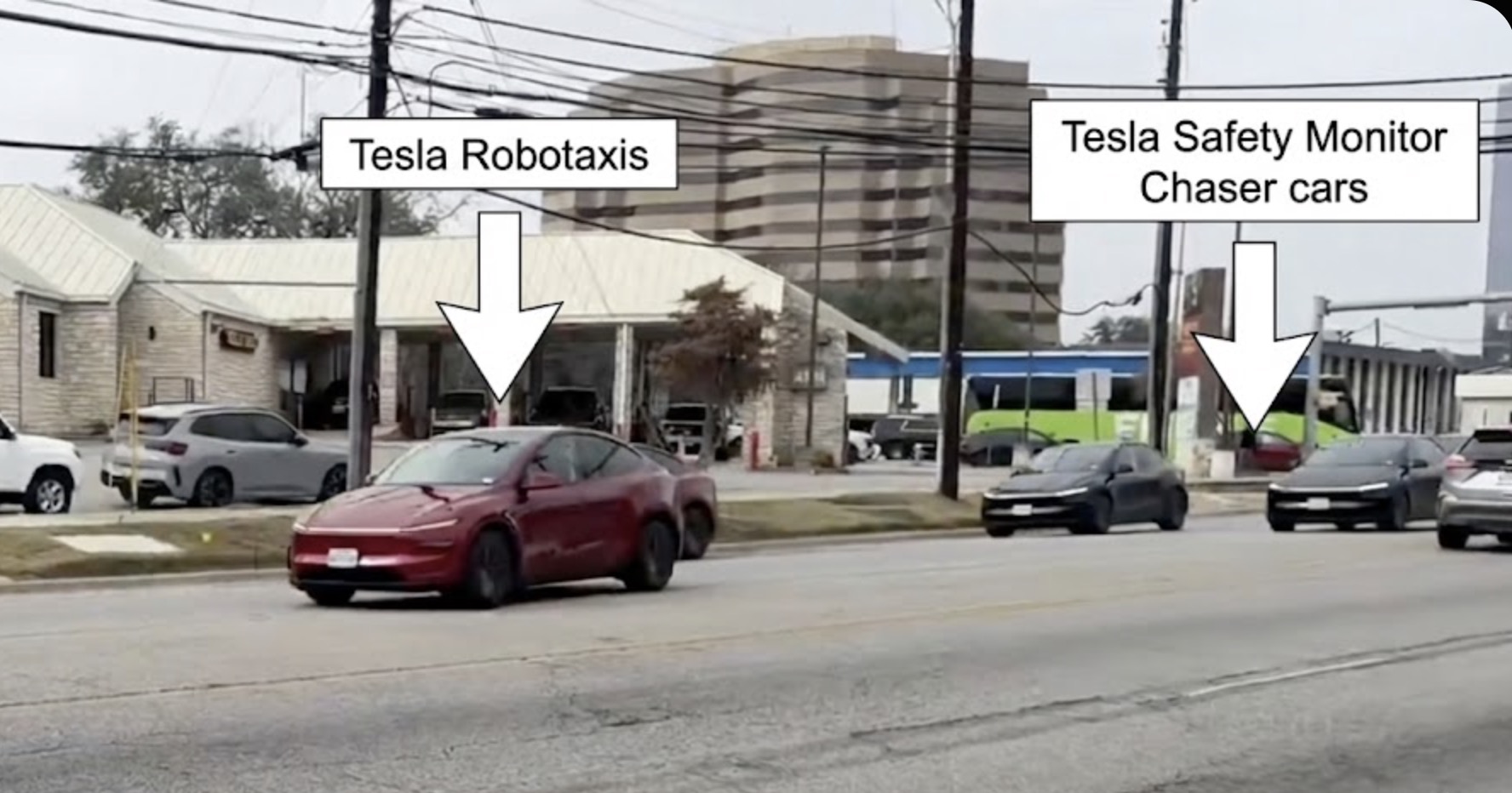
TL;DR: Tesla announced some public Robotaxi rides in Austin are now 'unsupervised,' meaning no human in the car. But hold up! New videos suggest those driverless Teslas are being shadowed by a second Tesla, with a human 'safety monitor' trailing close behind. So, is it truly unsupervised, or just a shell game?
Meta: Tesla announced 'unsupervised' Robotaxi rides in Austin, but reports suggest safety monitors might have just moved to trailing cars, sparking debate over true autonomy compared to Waymo's established driverless operations.
Alright, folks, you know I love a good show, and Tesla's latest act in Austin, Texas, had everyone talkin'. Elon Musk himself jumped on X to declare that Robotaxi rides are now running with 'no safety monitor in the car.' The stock market did its little dance, and headlines screamed 'driverless!' But when the curtain fell, some folks in the audience noticed a little something extra in the background.
The Case of the Trailing Tesla
Turns out, these 'unsupervised' Robotaxis might not be so alone after all. Video evidence has surfaced showing these supposedly driverless Teslas being followed, like a nervous parent at a school play, by another black Tesla. And guess who's probably in that trailing car? Yep, the 'safety monitor' they supposedly removed! It's like saying you're on a solo trip, but your mama's following you in her car, just in case.
Now, I ain't sayin' it ain't progress, but when you claim 'unsupervised,' folks expect, well, unsupervised. This 'chase car' method just ain't scalable, it ain't cost-effective, and it certainly ain't the full-blown autonomy Elon's been promising since, what, 2016? Meanwhile, Waymo's out here in six cities, including Miami now, truly driverless, racking up millions of miles with no human babysitter in sight. They even got a track record of safety data, unlike… well, you know.
The Numbers Game
Let's talk numbers, 'cause numbers don't lie. While Tesla's Austin Robotaxi fleet is small – some reports say fewer than 10 cars running consistently – and has been involved in a surprising number of crashes even with a human monitor, Waymo's logging 450,000 driverless rides a week. Tesla's crash rate, with monitors, has been reportedly higher than human drivers. Now imagine taking the monitors out, and just moving them to a 'chase car.' It makes you wonder, don't it?
This whole situation highlights the difference between a PR win and a genuine technological breakthrough. Tesla's VP of Self-Driving, Ashok Elluswamy, did say they'd start with 'a few unsupervised vehicles mixed in' and increase the ratio over time. That's a more measured, responsible approach, I'll give him that. But it sure does contrast with the big, bold 'solved autonomy' claims.
What’s Next
We'll be watching how quickly this 'ratio' of truly unsupervised Robotaxis actually increases. The real test is whether Tesla can scale this service safely and without the need for human escorts. The comparison with Waymo, which operates truly driverless, will continue to be a key benchmark. For now, it seems the future of robotaxis is still more about careful steps than giant leaps.
Look, I'm all for innovation, but let's call a spade a spade. If you're gonna call it unsupervised, make sure nobody's lookin' over its shoulder. Just sayin'.
Previous
Musk's Grand Tour: FSD Approval in Europe & China on the Horizon?
Next
Canada's Cold Shoulder to EVs: Hybrids Heat Up as ZEV Growth Stalls

Eddie W
Author
Need an OG image?
Share this story to automatically generate an image via /api/og.
Comments
Join the discussion below.