

Analysis
Farming for a Future: Pricing Fertilizer Emissions to Clean Up Climate Without Inflating Food Costs
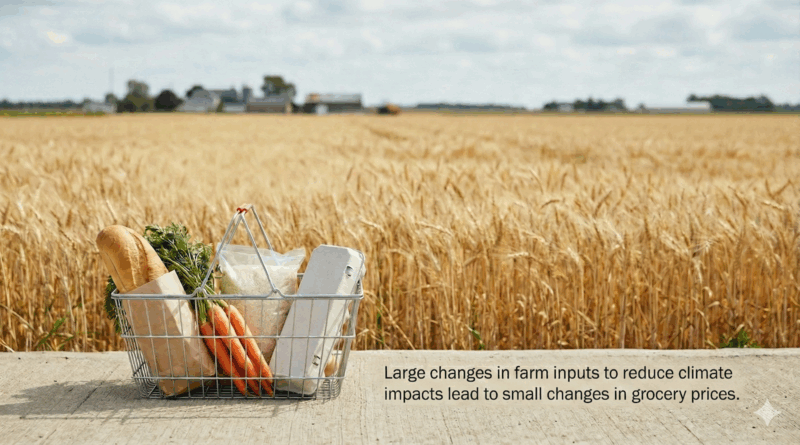
TL;DR: Here’s a hot take: pricing fertilizer emissions could slash climate pollution from farming without making your groceries ridiculously expensive. It sounds counterintuitive, but the numbers show that changing incentives at the farm gate drives big environmental gains while barely nudging prices at the checkout. That’s what I call a win-win!
Meta: New analysis suggests that pricing fertilizer emissions can dramatically cut agricultural climate pollution without significantly increasing grocery prices.
Alright, alright, settle down now, because we’re talking about something important here: the food on your table and the air you breathe! For a long time, the idea of 'pricing fertilizer emissions' sounded like a recipe for outrage – higher food prices, angry farmers, the whole nine yards. But hold onto your hats, because some smart folks have crunched the numbers, and it turns out this policy could be a game-changer for the climate without making your grocery bill look like a king’s ransom. It’s like finding out broccoli can taste good and be good for you!
The reason is simple, and a little sneaky: while fertilizer is a big part of farming costs and an even bigger slice of crop agriculture emissions (we're talking half of global crop GHG emissions!), farms only capture a minority of what you pay for your food. Most of that money goes to processing, transport, packaging, and the grocery store itself. So, if you change incentives for the farmer, you reshape behavior quickly, but the effect on your shopping cart? It gets damped down by the rest of the food system. That’s smart economics, baby!
The Nitrogen Problem: More Than Just Crops
Modern farming relies heavily on nitrogen fertilizer, and that’s where the emissions hang out. Not just from the fields, mind you, but also from the manufacturing process itself. Most nitrogen fertilizer starts as ammonia, which traditionally uses fossil methane, pumping out CO2 and sometimes methane leakage. Even if we go 'green ammonia' (made with low-carbon electricity) or 'blue ammonia' (with carbon capture), that doesn't fix the biggest issue: nitrous oxide. This bad boy, released when nitrogen gets lost in soils, has about 265 times the warming impact of CO2 over a century. A small loss, a big problem. It’s like a tiny gnat causing a huge disturbance in a quiet room!
So, pricing these emissions means putting a cost on the expected greenhouse gases from both production and use. It won't require measuring every field in real-time; it'll rely on emissions factors, with credits for practices that reduce pollution. This raises the cost of excess nitrogen, not essential nitrogen. It means farmers get a real financial incentive to get smart about how they use fertilizer, like making sure every drop counts.
Small Changes, Big Impact on the Farm
Now, for your wallet: if fertilizer costs (which are about 20-25% of a farmer’s total cost for crops like corn) rise by, say, 50% due to emissions pricing, total farm costs might go up 11%. When that trickles down to the grocery store (where farmers get about 24% of your dollar), your food bill might see an increase of about 2.6%. For a typical American spending $3,100 a year on groceries, that's roughly $80 more a year. Not nothing, but certainly not breaking the bank. It's like paying a little extra for organic, but this time, it's for the whole planet!
But for farmers, that 11% increase in a key variable cost? That's a huge incentive to adopt precision agriculture. We're talking variable rate application, better timing, soil testing, and using new products like slow-release fertilizers or even biological nitrogen fixation (microbes that help plants get nitrogen from the air). This means less waste, fewer emissions, and possibly even better yields. It's about working smarter, not just harder. The market shifts from buying bulk fertilizer to investing in data, services, and targeted delivery. It’s about leveraging technology to do more with less, which is always a good thing.
What's Next
Expect more detailed policy discussions around how to implement and scale fertilizer emissions pricing effectively. This could drive significant innovation in agricultural technology and sustainable farming practices. We might see new market mechanisms that reward farmers for adopting cleaner methods, making environmental stewardship a direct path to economic benefit. This isn't just about reducing pollution; it's about reshaping the entire agricultural system for a more sustainable future.
So, don't let anybody tell you we can't clean up our act without starving the world. The math is clear, and the future of farming looks greener than ever. Now, if you'll excuse me, I gotta go check if my plants are carbon-neutral. Just kidding… mostly.
Previous
Unlocking the Undead Rivian: How to Jump-Start a Totally Dead Electric Truck
Next
Nio's Goin' Big: The ES9 SUV Is Ready For Its Close-Up!

Eddie W
Author
Need an OG image?
Share this story to automatically generate an image via /api/og.
Comments
Join the discussion below.