
Analysis
Ireland's Data Center Decree: Bring Your Own Green Energy, Or No Power for You!
TL;DR: Ireland’s had enough of data centers gobbling up its electricity grid. A new policy now demands that any data center wanting a grid connection must install on-site clean energy or battery systems capable of meeting its full demand, and even feed power back to the national grid when needed. It's a bold move to balance economic growth with energy security.
Meta: Ireland's new policy requires data centers to provide their own on-site clean energy or batteries, and to feed power back to the grid, addressing soaring electricity demand.
Now listen up, folks, because Ireland is laying down the law, and it’s a smart move for clean energy! You see, Ireland’s got more data centers than a cat has whiskers, especially around Dublin. These data centers bring in jobs and tax revenue, which is great, but they also suck up electricity like a teenager at a milkshake bar. The grid operator in Dublin warned back in 2021 that they couldn't handle new data centers without risking widespread blackouts. So, for four years, nothing new got built. But now, they've got a plan, and it's a beauty!
Green Energy Mandate
In December, the Commission for Regulation of Utilities dropped a new policy: if you want a grid connection for your data center, you better bring your own damn energy! That means installing on-site generation or battery systems capable of meeting your full electricity demand. And not just that, you gotta be ready to feed power back to the national grid when needed. Talk about pulling your weight! Plus, at least 80% of that electricity has to come from new renewable energy sources. This ain't no joke; this is serious business for data centers that already consume about a quarter of Ireland's electricity, more than all urban households combined. You gotta be clean to play in Ireland now, baby!
A Leap Towards Sustainability
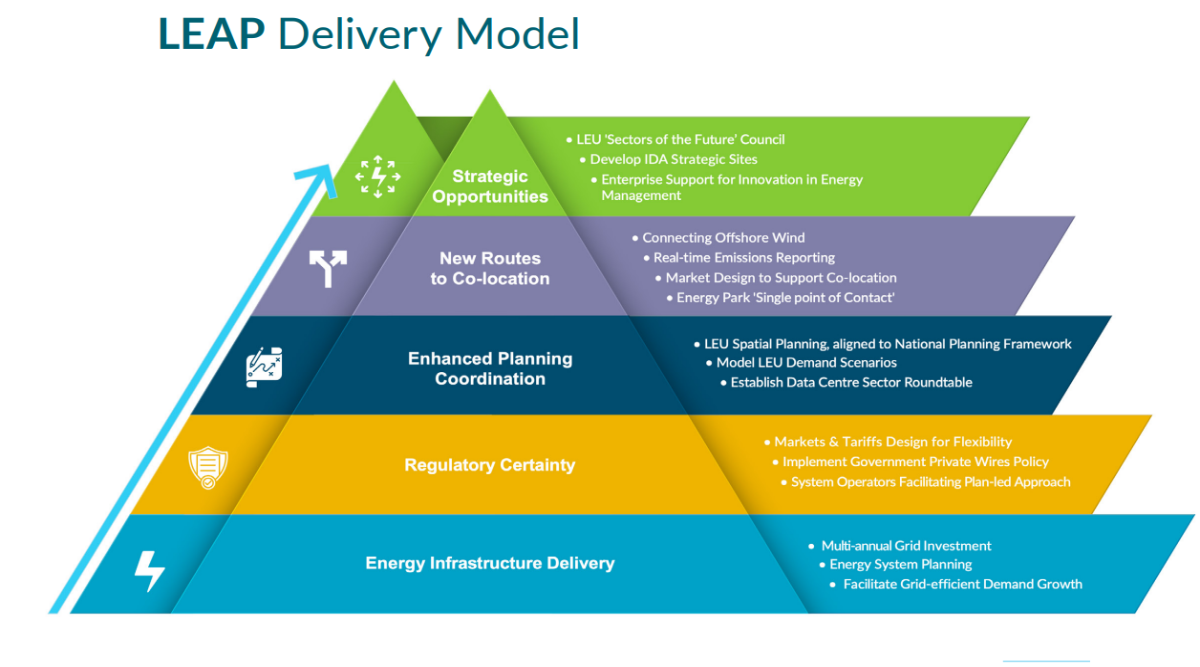
On January 13, 2026, the Irish government unveiled its "Large Energy User Action Plan" (LEAP). This plan calls for establishing special "Green Energy Parks" where big electricity consumers can set up shop right next to clean power sources, like offshore wind installations. Energy Minister Darragh O’Brien said it provides "additional certainty for the sector" and will bring in "more jobs, bring more investment in." This isn't just about curbing consumption; it's about reimagining the grid itself, moving from a single point source to multiple inputs, letting neighbors share electricity. It’s like a block party, but for power!
Meanwhile, over in the US, some politicians are still pushing for more thermal and nuclear power for data centers, ignoring faster, cheaper renewable options, all while some folks are giddy about AI, not thinking about the environmental harm. Ireland, on the other hand, is showing some real intelligence, balancing economic growth with a commitment to clean energy. They're making sure that if you want to be a big player in their country, you gotta play clean. That's how you get things done, folks!
What’s Next
The success of Ireland's new policy and the LEAP initiative will be a critical case study for other nations grappling with soaring energy demands from data centers. If successful, it could drive significant investment in on-site renewables and storage solutions, transforming how large energy users integrate with national grids and accelerating broader decarbonization efforts. This could also influence legislative changes globally regarding energy ownership and distribution.
Ireland ain't playing! They're saying, "You wanna plug in? You better bring your own juice!" That's what I call putting your foot down for clean energy. Boom!
Previous
VinFast Unleashes Electric Scooter Army in Vietnam, Tightens Grip on Home Turf!
Next
UK Floating Solar Power Gets a Spin: Tracking Tech Boosts Output by 26%!

Eddie W
Author
Need an OG image?
Share this story to automatically generate an image via /api/og.
Comments
Join the discussion below.