
Analysis
Tesla FSD vs. Airliner Autopilot: A Pilot's Take! Who's Really Flying This Thing?
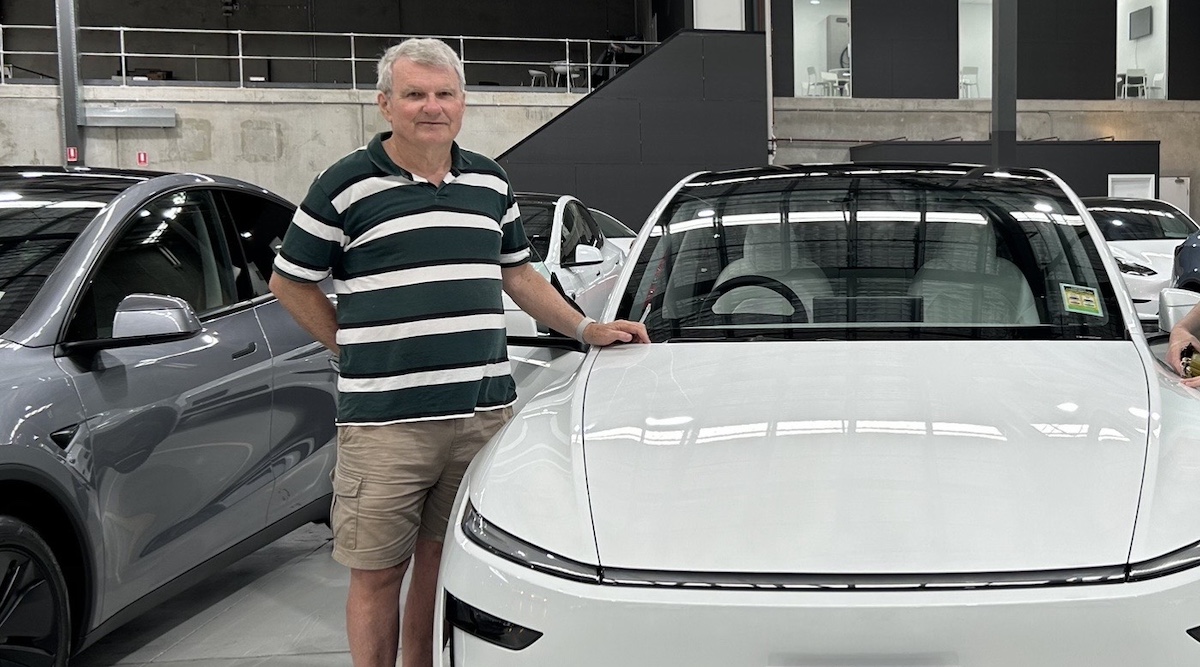
TL;DR: A former Qantas pilot with thousands of autopilot hours says Tesla's Full Self-Driving Supervised (FSDS) is amazing but still needs a watchful human eye, just like flying a plane. Turns out, solving self-driving for cars is way more complex than keeping a jumbo jet straight at 30,000 feet. Who knew?
Meta: A veteran pilot offers insights into how Tesla FSDS compares to commercial airliner autopilot, emphasizing human oversight.
From the Cockpit to the Car: A Pilot's Perspective
Alright, folks, buckle up, because we're about to get a high-flying perspective on Tesla's Full Self-Driving Supervised (FSDS)! Everyone's been talking about FSDS, but what does a guy who's spent tens of thousands of hours in a cockpit, flying Boeings for Qantas, have to say about it? David Nye, a veteran pilot, weighed in, and his take is fascinating. He's been monitoring autopilot for ages, even had to hand-fly a 767 from Japan to Australia once when the autopilot went kaput! Talk about a long night at the office!
Now, David's got three Teslas in his family, so he's not just talking out of his hat. He says FSDS is "totally astounding" even with occasional mistakes. He sees cars ultimately going the way of commercial airliners, where humans primarily monitor the machine. "There's just no way a human can pay attention and exercise the nuance of control across multiple dimensions that a machine can," he says. Plus, machines don't get tired, distracted, or have medical episodes. That's a good point, because after a long day, sometimes I'd rather just tell the car, "Take me home, Jeeves!" And not have to worry about a thing.
The Complexity of the Road vs. the Sky
But here's where it gets interesting: David genuinely feels that solving self-driving for cars is "infinitely more complex than aircraft autopilots." Think about it. In the sky, you've got predictable air currents, clear flight paths, and other planes are mostly behaving themselves. On the road? You've got squirrels, potholes, distracted drivers, sudden turns, kids running after a ball... It's a chaotic ballet of variables! Airliner autopilots, for decades, did little more than keep wings level, gradually adding features over many years. Car FSD is trying to do all that and more, in a much more unpredictable environment, much faster.
He talks about people in California, in their 80s, who say FSDS is "literally life-changing," using it almost 100% of the time. They even named their car "James"! "James drives us everywhere!" they say. That's a real-world endorsement, not just some fancy tech demo. So, while FSDS still needs human supervision, the promise of it becoming a true daily driver is making life easier for many. It's like having a chauffeur who also happens to be a super-computer.
What’s Next
As FSD continues to evolve and gets closer to unsupervised operation, expect the public debate to intensify. The comparison to aviation autopilot, a mature and trusted technology, will become more relevant in shifting public perception. The key will be demonstrating safety, reliability, and ultimately, a level of convenience that makes the human driver's role primarily one of oversight. Whether the car repair industry likes it or not, fewer accidents thanks to AI could be a huge win for everyone (except maybe the body shop down the street).
Alright, that's the flight plan. Stay safe, and keep those hands (and eyes!) ready!
Previous
Aventon's Soltera 3 ADV: The Lightweight e-Bike That's Almost Perfect, Just Needs a Little More Juice!
Next
Honda's 0 Series Saloon Hits a Snag: EV Sedan Delayed Until 2027!

Eddie W
Author
Need an OG image?
Share this story to automatically generate an image via /api/og.
Comments
Join the discussion below.