

Analysis
LFP Batteries: Charge 'Em to 100% or Risk Your Range?
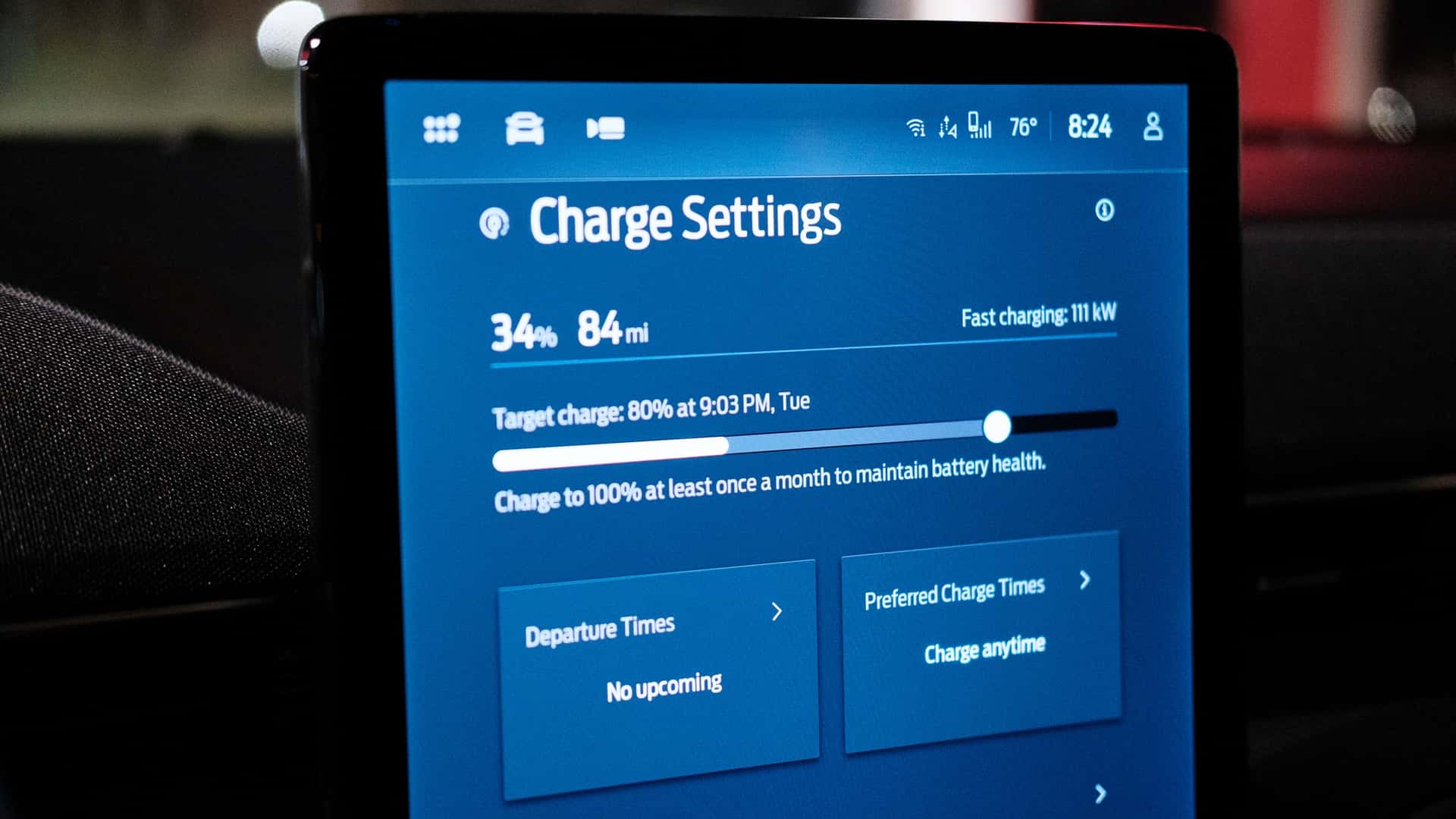
TL;DR: Got a Ford Mach-E or certain Tesla Model 3/Y with an LFP battery? Turns out, these bad boys actually want to be charged to 100% regularly. It's all about keeping that battery management system calibrated.\n\nMeta: LFP battery EVs from Ford and Tesla benefit from regular 100% charging to maintain battery health and range accuracy, a contrast to NMC battery advice.\n\nAlright, alright, settle down now! I know what y'all been told: never charge your EV to 100% daily, right? "Eighty percent, max!" they shout. But hold onto your hats, because if you've got a Ford Mustang Mach-E or certain Tesla Model 3s and Ys rocking an LFP (Lithium Iron Phosphate) battery, that advice just flipped on its head like a pancake in a hurricane! These particular power packs actually thrive on getting topped off to a full 100% regularly. It's like finding out your doctor wants you to eat more ice cream. Who knew?\n\n### The LFP Lowdown: A Different Breed\n\nSee, most modern EVs use NMC (Nickel Manganese Cobalt) batteries, and for those, keeping them between 20-80% charge helps prolong their life. But LFP batteries? They're a different animal. They're cheaper to produce, often more durable, less prone to thermal runaway (read: less fire risk, though EV fires are rare anyway), and they don't rely on controversially sourced materials like cobalt. They might have a bit less energy density, meaning slightly less range, and can be a bit sensitive to super cold temps, but they're tough workhorses. China’s been all over them, and now they're making a big splash in the US, showing up in more affordable trims of popular EVs.\n\n\n\nSo, why the 100% charge? It's all about the Battery Management System (BMS). This is the brain of your battery, monitoring everything from voltage to temperature. For LFP batteries, periodically charging to 100% helps the BMS calibrate itself properly, ensuring those range estimates on your dashboard are accurate. Ford says "at least once a month," while Tesla used to recommend "at least once per week." It's like resetting your watch so it keeps perfect time. Don't want that brain getting rusty, do we?\n\n### Ford, Tesla, and the 100% Club\n\nIf you're driving certain versions of the Ford Mustang Mach-E (Select and Premium with the Standard Range battery), entry-level Rivian R1S/R1T, or many Standard Range, rear-wheel-drive Tesla Model 3 and Model Y variants, you've likely got LFP under the floor. Ford even puts a message on the screen: "Charge to 100% at least once a month to maintain battery health." Tesla's user manual now defers to what your car's touchscreen says, but the sentiment's the same: let 'em fill 'er up!\n\n\n\nNow, a recent study did hint that repeated 100% charging could lead to degradation over time by forming harmful compounds. But even that study admitted keeping LFP batteries at low states of charge is pretty useless. And hey, we've seen plenty of LFP Teslas with minimal degradation after 100,000 miles, even with frequent full charges. So, the consensus remains: follow what your car (or its manual) tells you. It's smarter than you think!\n\n### What’s Next\n\nAs LFP batteries become more common in the push for more affordable EVs, understanding their unique needs will be crucial for owners. Expect more automakers like Hyundai and Volkswagen to incorporate them into their lineups. For now, if your EV has an LFP, feel free to give it that full charge it craves. It’s a small tweak that could make a big difference in the long run, and let you get more mileage out of your ride. And who don't want more mileage?\n\nSo, go ahead and charge that LFP to the max! Your battery will thank you, and you'll have one less thing to worry about. Just try not to feel too rebellious, alright? That's how we roll!\n\n
Previous
Hyundai's IONIQ 3: Bringing Style and Affordability to the EV Game!
Next
China Unleashes World's Largest Offshore Solar Farm: A Gigawatt of Sun Power!

Eddie W
Author
Need an OG image?
Share this story to automatically generate an image via /api/og.
Comments
Join the discussion below.